
Adult urban bike helmet: protection and comfort every day



Starting at £78.48
£70.65


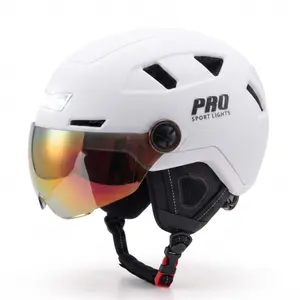


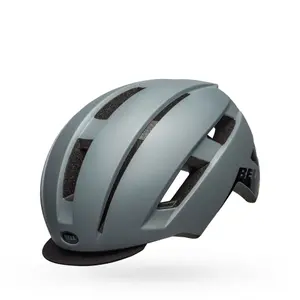
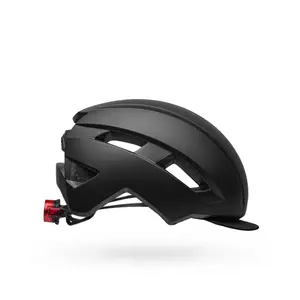


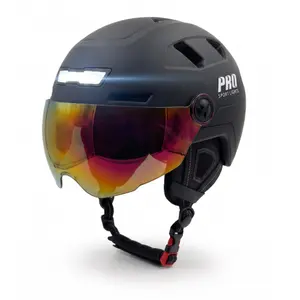


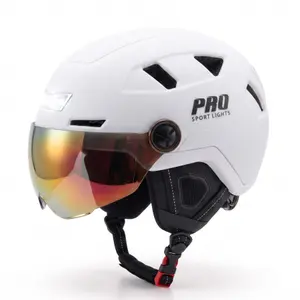
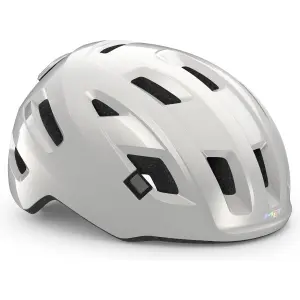
An urban helmet protects your head during daily commutes, with a more understated look than a road helmet. All comply with the European standard EN 1078, required for sale in Europe. Compare the bowl shapes, models with visors or built-in lighting, and protections against oblique impacts, then choose the size based on your head circumference.
What is an urban bike helmet?
An urban helmet is designed for city rides, whether on a regular bike or an electric one. It often covers more of the back of the head, has fewer vents than a road helmet, and features a more understated style. Some models use a hard ABS shell, while others have a thinner shell molded over foam, which is lighter.
What does the EN 1078 standard guarantee?
Every bike helmet sold in Europe has the CE marking and complies with the EN 1078 standard. It requires impact resistance tested in a lab, a minimum area of skull protection, and a retention system to keep the helmet in place. This standard serves as the common baseline: the technologies described below go further.
MIPS and oblique impact protection: what are they for?
In a fall, the head rarely hits the ground at a right angle: the impact is most often oblique and causes rotation. The MIPS system adds a thin layer that slides slightly against the head to limit this rotation, a type of impact not tested by the EN 1078 standard. Other manufacturers have developed their own solutions, such as KinetiCore from Lazer or WG11 from Kask. For everyday use in dense traffic, it is worth considering.
How to choose the right helmet size?
Measure your head circumference with a soft tape measure, going around the middle of your forehead and the back of your head. For reference, size S usually corresponds to 54 to 57 cm, M to 57 to 59 cm, and L to 59 to 62 cm, but each brand publishes its own sizing chart.
A well-fitting helmet shouldn't move when you shake your head, with the adjustment dial tightly secured. The straps should form a Y under each ear, and the chin strap should allow one finger to fit under your chin. The front edge should sit about two fingers above your eyebrows.
What options are there for city riding?
Integrated lighting at the back of the helmet improves your visibility at night and in gloomy weather. A visor protects against rain and low sun. Light colours and reflective strips make you more visible in traffic. For rain, a helmet cover can be found in the helmet accessories, alongside visors and replacement foams.
The other categories of helmets
Connected, illuminated, and airbag helmets feature indicators, lighting, or inflatable protection. Kids’ helmets are sized for smaller head circumferences. The entire selection is available in the helmets category.
Which urban helmet brands to choose?
Abus offers the Hyban 2.0 with a durable ABS shell, reflectors, and integrated LED lighting to be seen from a distance.
Lazer equips the Cityzen with its KinetiCore technology for oblique impact protection, a soft ABS shell, and a TurnSys adjustment system.
Kask combines a molded shell with its WG11 technology on the Urban R, which limits helmet rotation during a fall.
Met offers urban helmets equipped with the MIPS system, such as the Intercity.
CGM stands out with vintage-style bowl helmets, like the Ebi.
Bern has a range of bowl-shaped helmets, including the Allston with a pivoting visor and the Macon 2.0 with MIPS.
Where to find a bike helmet on sale?
Models from previous collections can be found on the clearance page, while the latest references are under new arrivals. Black Friday, holidays, and winter sales are also good times to update your helmet.
Frequently asked questions
Is wearing a helmet mandatory when cycling?
In France, wearing a helmet is mandatory for children under 12, whether they are riding or passengers. For adults, it is highly recommended, both in the city and on the road.
When should you replace a bike helmet?
Replace your helmet after any fall or significant impact, even if there is no visible damage: the inner foam may have lost its shock-absorbing capability. Without an impact, most manufacturers advise changing it approximately every five years.
Is an urban helmet suitable for an electric bike?
Yes, for an electric bike assisted up to 25 km/h, a helmet compliant with the EN 1078 standard is suitable. A speed pedelec, which is faster, requires a helmet that meets a more demanding standard, the NTA 8776.
Does a helmet with integrated lighting replace bike lights?
No. The helmet lighting complements the bike's lighting, which must remain equipped with a front light and a rear light for riding at night or in poor visibility.
How to maintain your helmet?
Clean the shell and foams with warm soapy water, avoiding solvents or abrasive products. Avoid leaving the helmet in direct sunlight or in a heated car for long periods, as this can weaken the materials.







